J and E Engineering Services Ltd.
Unit 32, Britannia Mill.
Stoneholme Road,
Crawshawbooth,
Rossendale,
Lancashire.
BB4 8BA


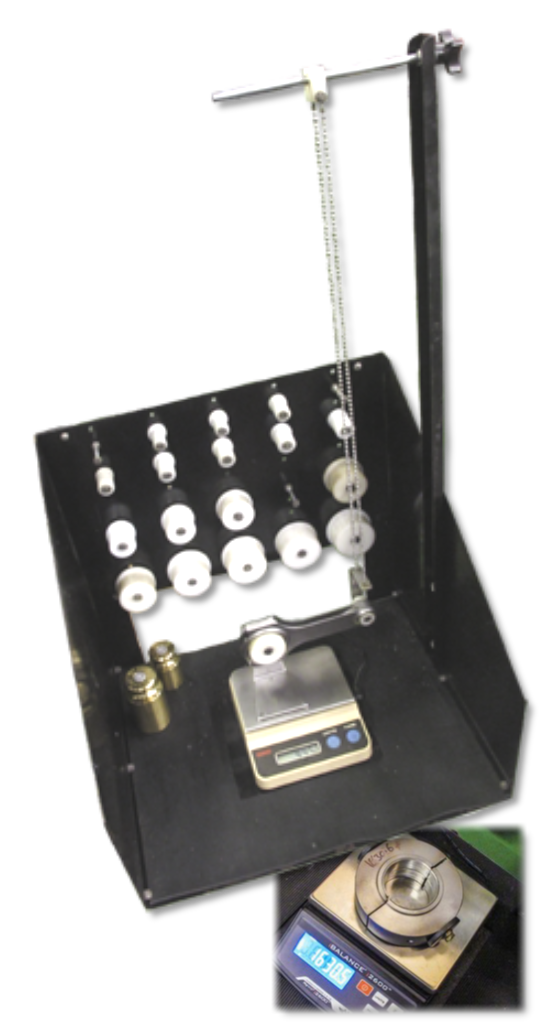


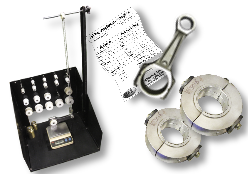




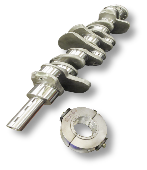

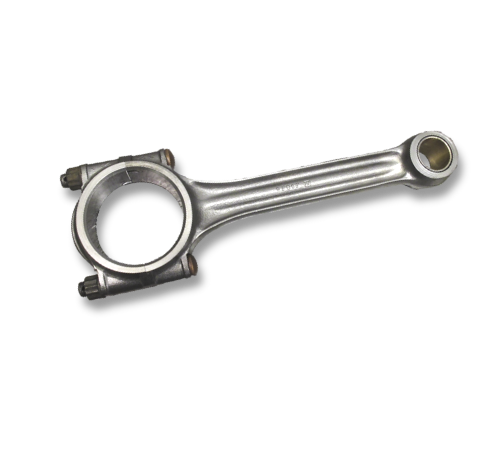
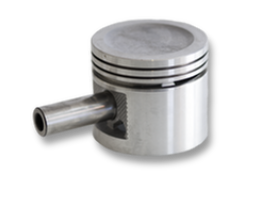
An important part of the complete balancing package is not only the rotating assembly but also the reciprocating parts. We can balance pistons and connecting rods. Pistons are match balanced and we can balance not only the connecting rod as a whole but the big end and little end independently from each other. This process is optional on inline engines and essential for V6, V8 configurations.



If you are building a V8 or V6 and are replacing rods or pistons the crankshaft assembly must be balanced to suit the new weight combination of rod and piston. Piston and rod weights can vary greatly between manufacturers. Performance parts are usually much lighter than standard parts. We weigh the new components which include: Piston, gudgeon pin, circlips, rings, big end shells, big end of conrod, little end of con rod, rod bolts/studs and nuts, oil. From this total mass and a balance factor calculation we can make a “Bob Weight” set. These bob weights are attached to the big end journals and simulate the mass of the piston & rod assemblies during balancing. Allowances for under balancing or overbalancing are made at this point depending on road or race applications.




An often overlooked element of engine building is that of crankshaft balance. All crankshafts are balanced to some degree from the manufacturer however they are only balanced to a coarse setting due to time constraints and costs during manufacture. This is where we can improve.

Effects of imbalance. This is a Rover V8 crankshaft taken from a race motor. It has snapped just before number 2 main bearing journal. The block was also badly damaged and required line boring to recover it. Obviously this shaft cannot be recovered. A poorly balanced rotating assembly can literally tear your engine apart. It is important to check and improve balance for a road going inline engine and absolutely essential for any “Vee” configuration, fast road or race motor. It is important to note that balance problems can arise from not only the actual crankshaft but the front damper, flywheel and clutch assembly. This is why we balance each of these individual component separately and then as a complete rotating assembly correcting out of balance problems along the way.

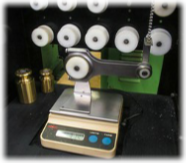
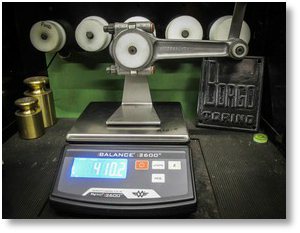
Here our balancing scales can be seen. Connecting rods and pistons are match balanced by first determining the lightest rod or piston and then balancing the remaining parts to match. Metal can be removed by either drilling or grinding to achieve this. Connecting rod little end and big ends can be weighed independently from each other using this end to end balancing set up. This is an important area of balancing for fast road & race engines with an in line or flat configuration and is essential to calculate correct crankshaft balancing for “Vee” configurations. From this balancing procedure we can calculate the correct “Bobweight” to simulate the actual pistons and rods being fitted to the crankshaft when dynamic balancing.
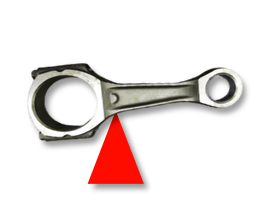
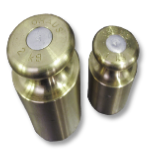


Even flywheel bolt type and length, woodruff keys, dowels, clutch bolts and washers can and will effect balance results. We can even balance these components to ensure you have the most comprehensive dynamically balance crankshaft assembly.

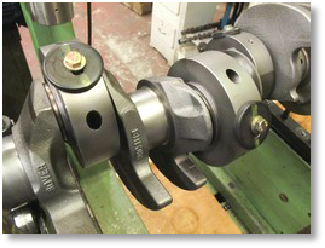


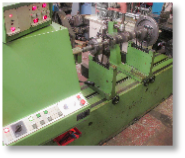
This is our “Borgo” dynamic crankshaft balancing machine. It is used to detect slight vibrations in the crankshaft assembly when it is rotated at high speed just as it would inside your engine. The readings are sent to a display which tells the operator how much weight to add or remove at a given location to counter an out of balance condition. Weight is removed by either drilling or grinding. Weight can be increased by adding metal in the form of a heavy metal slug or welding. Our machine can accommodate shafts of up to 2 metres in length and up to 300kg.


Here you can see one of our bob weight cards which has all of the information required to build a bob weight set to suit this particular crankshaft. Above you can see a pair of weights already made up. These particular weights are dedicated to Rover V8 applications as they have the correct internal bore size to suit the crankshaft journals. Weight can be added or removed from the outer fittings. The bob weights are themselves dynamically balanced on a straight mandrel to ensure the most accurate results when fitted to the crankshaft.
Here you can see the bob weights fitted to the crankshaft.
This Chevy crankshaft has our universal bob weights fitted. They look a little different but serve the same purpose.

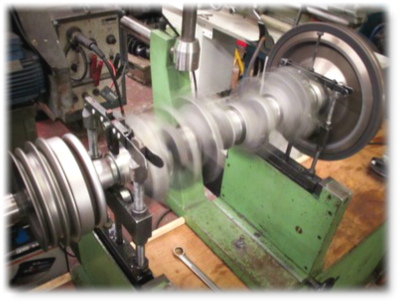


All J and E Engineering top spec fully rebuilt engines include fully dynamically balanced crankshaft assemblies.
The balancing of your engine components is always a good idea but it is essential when:
The piston and/or connecting rod combination have been changed and the engine is a Vee configuration.
The flywheel has been lightened.
The clutch is replaced.
The crankshaft has been stroked.
The crankshaft has been modified: ie, rear oil seal conversion, straightened, knife edged.
The flywheel is replaced.
Additional flywheel bolts are added.

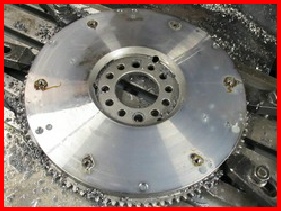
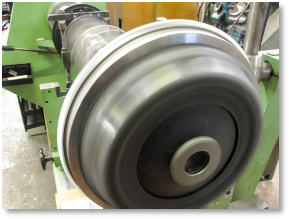
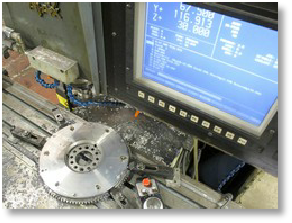

This flywheel is having the bolt pattern altered from that of an old design coil spring clutch to that of a more modern diaphragm type. Although we set up the centres as accurately as possible there is a possibility that there will be a discrepancy between the old and new bolt geometry. This means that the clutch and flywheel will require balancing to eradicate an out of balance situation.
Don’t take the risk, get it checked!

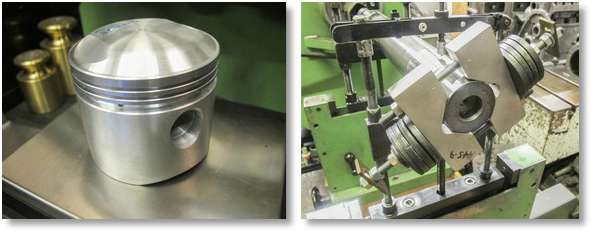
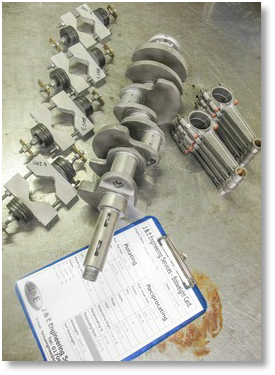
This Daimler V8 crankshaft assembly required the full balancing treatment as an upgrade and because the cylinder block had been bored to +.040” The pistons we purchased were larger and slightly heavier than the originals. During the first balancing test we found a significant vibration that required a small amount of heavy metal to be added to both the front and rear counter weights.
The video on the left shows the crankshaft with bob weights assembled during a balance test while the video on the right shows the full assembly, crank,damper,flywheel and clutch cover during balancing. Both videos show tests at 450 and 900rpm. The red numbers on the display indicate how much out of balance and location. The closer to zero the better.
Connecting rods end to end balanced.
New piston +.040”.
Bob weight being balanced before fitting to crankshaft.
Crankshaft with bob weights prior to balancing.
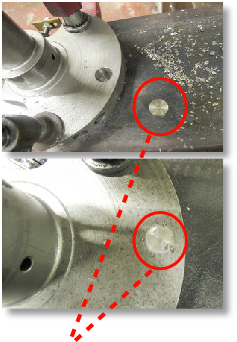
Heavy metal slug pre and post fitting to counter weight.


Crankshaft Balancing. Click to view the video.
Crankshaft Assembly Balancing. Click to view the video.